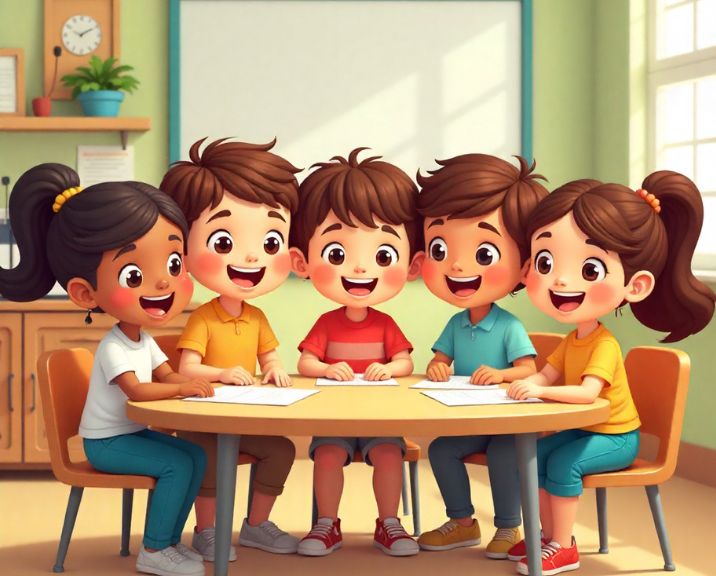
Cooperative Learning: Collaborating for Success
The classroom environment is one of the most important factors affecting student learning. Learning should always be fun, engaging, interactive, and effective. One of the aspects of learning which has created an impact in classrooms is cooperative learning. Cooperative learning is a technique that allows students to learn from each other and gain important interpersonal skills. This learning is a teaching strategy used to promote a variety of activities and skills to small groups of students in order to improve comprehension.
Cooperative learning helps students understand that learning is not a solo journey. When students work together, they share ideas, explain concepts to each other, and learn faster. It also teaches them how to listen, speak politely, and respect different opinions which are important life skills, not just school skills.
The Manthan School, best play school in Noida Extension, has integrated a cooperative learning approach in the school curriculum to boost the learning experience in which students collaborate together in small groups in order to achieve a task or complete a goal given by the educator. Students are given a task or an assignment, and they work together to accomplish the task in which each student has responsibilities and is held accountable for aiding in the completion of the assignment. Therefore, success is dependent on the work of everyone in the group.
This method is especially helpful because it makes students more responsible. When each child has a role in the group, they feel important and involved. It also helps shy students speak up slowly and confidently because they feel supported by their teammates.

Cooperative learning
In cooperative learning, the main goal is simple students learn better when they learn together. They help each other, and the whole group improves as a team.
Cooperative learning can be done in different ways depending on the subject, the age group, and the learning goal. Some group activities are short and quick, while others continue for many days or even months.
Types of Cooperative Learning
Cooperative learning is a teaching strategy that involves students working together in groups to achieve a common goal. This approach has been shown to enhance student learning and engagement, as well as foster positive social skills and attitudes toward learning. There are different types of cooperative learning, each with its own characteristics and benefits. Here are the three main types of cooperative learning:
Informal Cooperative Learning:
This type of cooperative learning involves students working together in small groups to complete a task or solve a problem. The teacher may assign roles within the group or allow students to choose their own roles. Informal cooperative learning may be used for short-term projects or as a warm-up activity at the beginning of class.
This type works best when teachers want students to quickly discuss a topic, revise a concept, or solve a small task together. It keeps the class active and makes students feel more connected.
Formal Cooperative Learning:
Formal cooperative learning involves structured and planned activities that require students to work together to achieve a common goal. It usually requires a longer period of time and may involve multiple class sessions. The teacher typically assigns roles within the group and provides specific instructions for each task.
This is useful for big tasks like presentations, projects, experiments, and assignments. Students learn planning, time management, and how to divide work equally.
Base Group Cooperative Learning:
Base group cooperative learning involves students working in long-term groups for an entire academic year or semester. These groups are usually composed of four to six students and remain consistent throughout the year. The teacher may assign roles within the group or allow students to choose their own roles. Base group cooperative learning is often used in subject areas such as science, social studies, and language arts.
Since students stay together for a long time, they build strong bonding. They learn patience and trust, and they support each other emotionally and academically throughout the year.
Each type of cooperative learning has its own benefits. The informal type allows for quick and easy group work, promoting teamwork and communication skills. The formal type helps students develop critical thinking skills and learn how to collaborate effectively. Base group cooperative learning promotes social skills, as students have the opportunity to form lasting friendships and work together over an extended period of time.
Incorporating different types of cooperative learning into the classroom can help students develop social skills, improve academic achievement, and enhance their overall learning experience. Teachers can select the type of cooperative learning that best fits their student’s needs and learning goals, and adjust the approach as necessary to ensure that all students are fully engaged and learning effectively.
Key Elements of Successful Cooperative Learning
For cooperative learning to work well, a few things are important:
- Clear roles: Every child should know what they have to do (writer, speaker, timekeeper, etc.).
- Equal participation: No one student should do all the work.
- Group responsibility: The group succeeds when everyone contributes.
- Respectful communication: Students should learn to listen and speak politely.
- Teacher guidance: Teachers observe and guide groups so that learning stays on track.
Benefits
Some of the benefits of teaching cooperative learning to students are:
- Higher achievement.
- Increased retention.
- More positive relationships and a wider circle of friends.
- Greater intrinsic motivation.
- Higher self-esteem.
- Greater social support.
- More on-task behavior.
- Better attitude toward teachers.
- Better attitude toward school.
Cooperative learning is one of the most successful approaches to facilitating learning in schools. The Manthan School is one of the best schools in Greater Noida West that aims to provide education that focuses on the holistic development of a child and fosters him/her to become a good human being, a life- long learner, and a future leader.
At The Manthan School, cooperative learning is not just a classroom technique it is a way to build confident, kind, and capable learners. When children learn to cooperate early, they grow into adults who can communicate well, work in teams, and solve problems with a positive mindset.