How to Enhance Your Child’s Creativity in School and at Home
With daily schedules, curriculum pressure, exams, and competitions, creativity can easily get pushed to the side. Yet creativity is one of the most important skills children need to develop from an early age.
Creativity isn’t only about art or craft. It is a thinking skill one that helps children imagine, solve problems, explore ideas, and learn with confidence. It is also one of the most valuable skills for the future because it strengthens curiosity and encourages children to think beyond the obvious.
Why Creativity Is Important for a Child’s Growth
Creative children don’t just learn they explore. They ask questions, look for patterns, and try to understand things more deeply. Creativity helps children become better problem-solvers because they are willing to think differently and try new approaches.
Creativity also supports learning itself. When children feel free to express ideas and experiment, they often learn faster and remember better. They develop confidence in their thinking, and that confidence reflects in both academics and life skills.
In short, creativity builds independence, curiosity, and a stronger learning mindset.
What a Creative Classroom Looks and Feels Like
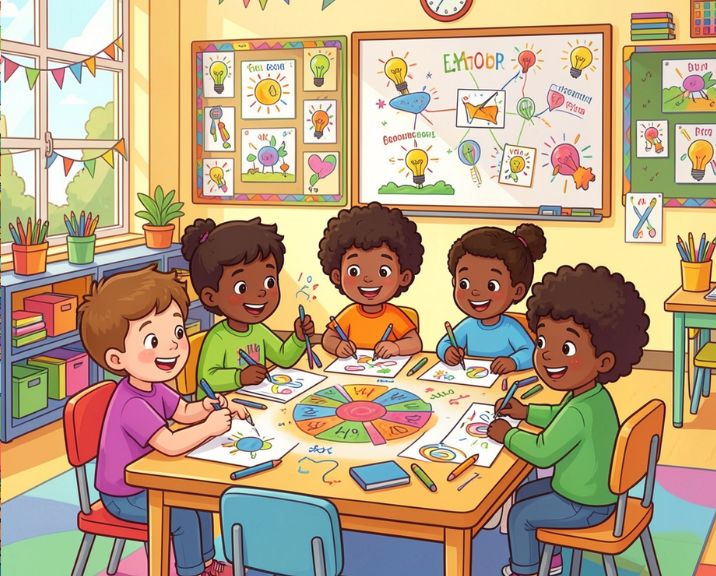
Creative classrooms don’t only look different they feel different. They give children the freedom to speak up, try ideas, and learn without constant fear of being wrong.
In a creative learning environment, students are more likely to:
- express their ideas openly
- think outside the box
- approach challenges with innovative solutions
- participate actively in discussions and activities
- learn more effectively through engagement
Imagination and creativity fuel progress. That is why creative thinking should be woven into daily learning, not treated as an “extra.”
How Schools Can Nurture Creativity in Students
Creativity grows when students are encouraged to explore. It becomes stronger through activities, projects, and learning experiences that allow children to imagine and create.
At The Manthan School, creativity is encouraged through various programmes, sessions, and classroom activities both inside and outside the classroom so students can explore ideas freely and develop their natural imagination.
A school that values creativity helps children discover their strengths and express themselves with confidence.
5 Key Areas That Strengthen Creative Thinking
Creativity is not one single trait it is supported by multiple habits and skills that shape how a child thinks and responds to challenges.
Here are five key areas that help boost creativity in children.
1) Imagination
Imagination is the foundation of creativity. It helps children visualise possibilities, create stories, explore ideas, and think beyond what is immediately visible.
When children are encouraged to imagine, they become more curious and more willing to explore learning.
2) Self-Motivation and Discipline
Creativity becomes stronger when children learn to stay focused and complete tasks. Self-motivation helps children practise skills consistently, while discipline helps them turn ideas into results.
This balance is important because creativity is not only about thinking it’s also about doing.
3) Resilience
Creative learners often try new things, and that means they will make mistakes. Resilience helps children keep trying without fear.
When students learn to handle setbacks calmly, they develop the confidence needed to explore and innovate.
4) Collaboration
Creativity grows faster when children work with others. Collaboration introduces children to new perspectives and ideas, helping them think more broadly.
Group activities also teach children to share, listen, and build something together important skills for both creativity and life.
5) Responsibility and Ownership
Children become more creative when they feel trusted. When students are given responsibility like creating their own projects or leading small tasks they learn to take ownership of ideas.
Ownership builds confidence, and confident children are more likely to express themselves creatively.
Creating a Creative Environment Matters
The classroom is at the centre of every child’s learning journey. When classrooms encourage creativity through activities, exploration, and open expression, children feel more motivated to learn.
Creativity can be nurtured in simple ways through hands-on tasks, discussions, project work, storytelling, role play, and opportunities to experiment.
The goal is to create a learning environment where children don’t feel limited by “right answers,” but are encouraged to explore better thinking.
Conclusion
Creativity is one of the most valuable skills a child can develop. It strengthens imagination, curiosity, problem-solving, and confidence skills that support both academic success and real-life growth.
When schools and parents nurture creativity through a supportive environment, children learn faster, think deeper, and express themselves more freely. And in the long run, creative thinking becomes a strength that helps them stand out not only in school, but in life.