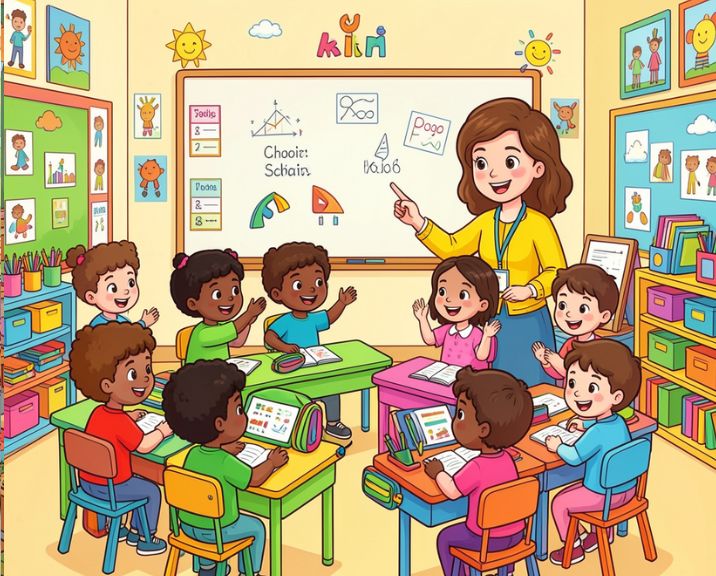
Keep Learning, Keep Rising: The Power of Contextual Learning
Learning becomes powerful when students don’t just memorise concepts, but understand what those concepts mean in real life. When children can connect a lesson to their own experiences, learning stops feeling like pressure and starts feeling meaningful.
This is the heart of contextual learning. It is a practical approach that makes learning more engaging for students and more effective for teachers. It encourages children to think, relate, apply, and take ownership of their learning journey.
At The Manthan School, contextual teaching and learning is emphasised as a way to help students learn with clarity, confidence, and lasting understanding.
What Is Contextual Learning?
Contextual learning is a method where students learn by connecting new information to real situations, examples, and experiences. Instead of learning in isolation, children understand concepts through context how something works, where it is used, and why it matters.
When teachers present information in a way students can relate to, students begin constructing meaning on their own. This makes learning deeper, more natural, and easier to retain.
Why Contextual Teaching Makes Learning More Effective
Every student’s mind naturally looks for meaning. Children learn best when they understand the “why” behind what they are studying.
Contextual teaching supports this because it helps students move beyond memorising and into understanding. It also makes learning more interactive because students participate actively instead of only listening.
This approach can strengthen important skills that students need in school and life, including:
- speaking clearly and confidently
- writing with better structure and expression
- listening with understanding and attention
- applying concepts in practical situations
Over time, students begin taking charge of their learning and learn to connect knowledge with its real-world application.
Contextual Learning: A Practical Approach for the 21st Century
Education today requires more than textbook knowledge. Students need to learn how to think, communicate, and apply what they learn.
Contextual learning supports this shift because it prepares students to understand concepts in a way that feels relevant. This relevance increases interest, and interest improves learning outcomes.
At The Manthan School, the focus is on practical, innovative learning approaches that help students grow beyond conventional classroom methods.
Key Benefits of Contextual Learning
Contextual learning is valued because it helps students understand concepts better and stay more engaged. It also supports confidence because students feel more capable when learning feels connected to real life.
Here are some clear advantages of contextual learning:
- Gives meaning and relevance to learning, so students understand why it matters
- Makes learning easier to grasp, because concepts feel familiar and relatable
- Encourages active participation, creating a more dynamic classroom
- Makes teaching more engaging, helping teachers bring lessons to life
- Supports change and growth in learning, by keeping students curious and involved
This is one of the reasons contextual learning is often seen as a more natural and effective approach for young learners.
How Contextual Learning Helps Students Grow in Confidence
When students learn through context, they feel less afraid of getting things wrong. They begin to explore concepts rather than simply trying to remember answers.
This approach encourages students to introspect, discover strengths, and express themselves better. Over time, students develop more precision in communication, stronger self-esteem, and greater confidence in learning.
They begin to see learning as something they can own something they can build through understanding, not fear.
Contextual Learning at The Manthan School
The Manthan School is one of the best primary schools in Noida Extension and focuses on creating learning experiences that are innovative, meaningful, and practical.
With emphasis on contextual teaching and learning, the school aims to help students learn in a way that stays with them supporting both academic excellence and personal growth. This approach helps children build understanding, confidence, and curiosity all essential qualities for lifelong learning.
Conclusion
Contextual learning makes education more meaningful because it helps students connect knowledge with life. It turns learning into an experience that students can relate to, understand, and apply.
When children learn with relevance, they become more engaged, more confident, and more independent in their thinking. And that is what helps them keep learning and keep rising.