How Collaborative Learning Builds Skills for the Future
In today’s fast-changing world, students need more than subject knowledge to thrive. Skills like creative thinking, critical reasoning, and the ability to work well with others are becoming just as important as academic learning.
That is why modern classrooms are increasingly focusing on learning experiences that help children communicate, collaborate, and build confidence. When schools nurture these skills early, students are better prepared for both higher studies and real-world challenges.
Why Skills-Based Learning Matters Today
Traditional learning alone cannot prepare students for a future where teamwork, problem-solving, and adaptability are required in almost every field. Children need environments that encourage them to think independently and express ideas clearly.
When schools focus on skills along with academics, students become more confident learners. They learn how to approach challenges with an open mind and improve through feedback and discussion.
What Is Collaborative Learning?
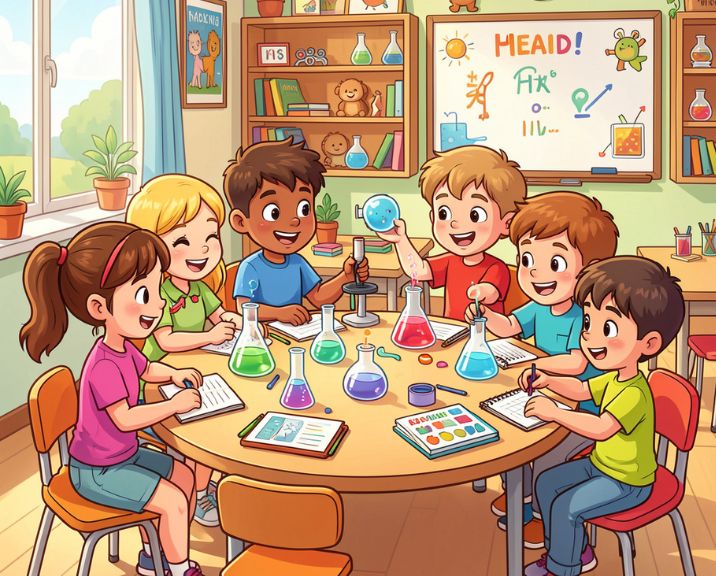
Collaborative learning is a method where students learn by working together in pairs or groups to solve problems, complete tasks, or explore ideas. Instead of learning in isolation, children engage with peers, share perspectives, and build understanding through interaction.
This approach helps students experience different ways of thinking and learn how to communicate their viewpoints respectfully. Over time, it strengthens both learning outcomes and the social skills needed to work effectively with others.
Benefits of Collaborative Learning
Collaborative learning works best when students are given the space to participate, share, and build together. It supports academic understanding while also developing life skills that help children perform with confidence in and beyond the classroom.
- Builds communication skills: Students learn to express ideas clearly and listen actively.
- Develops critical thinking: They compare viewpoints, ask questions, and evaluate ideas logically.
- Encourages creativity: Group work exposes students to new approaches and fresh perspectives.
- Promotes respect and empathy: Working together teaches children to value others’ strengths.
- Improves confidence: Participation and shared success help students feel more self-assured.
- Strengthens teamwork: Students learn responsibility, cooperation, and shared decision-making.
How Collaborative Learning Helps Students Learn Better
When students collaborate, they are exposed to possibilities they may not discover on their own. These interactions often act as catalysts that push students to think deeper, speak up, and improve how they present ideas.
As learners work together, they begin to understand that a topic can have multiple approaches and perspectives. This broadens their thinking and makes learning more meaningful, not just memorised.
How Collaborative Learning Builds Real-World Skills
Collaborative activities help students connect with an audience in unique and interesting ways, especially when they work on presentations, group projects, or discussions. When children shape ideas together, they also feel more invested in bringing those ideas to life.
They learn to ask questions to clarify doubts and critically review each other’s thoughts. By the end of a group task, students often feel proud of their contribution and experience a strong sense of achievement.
Why Collaborative Learning Is a Life Skill
Collaboration is not limited to school it is a skill students will carry into every stage of life. Whether in higher education or a future workplace, the ability to work with others, contribute meaningfully, and learn from different perspectives is essential.
It also strengthens confidence and social skills, helping children become more comfortable in teamwork situations. Over time, this prepares them to become innovators, problem-solvers, and thoughtful decision-makers.
Collaborative Learning at The Manthan School
The Manthan School, among the best CBSE schools in Greater Noida West, focuses on building students into confident learners who are prepared for the future. Along with quality education, students are encouraged to develop skills such as teamwork, critical thinking, and decision-making.
The school continuously looks for newer methods and learning experiences that help children participate actively. This ensures students don’t just learn concepts, but also learn how to apply them through interaction and collaboration.
Conclusion
Collaborative learning helps students grow in ways that go beyond textbooks. It improves communication, strengthens critical thinking, builds confidence, and teaches children how to work respectfully with others skills that are essential for the future.
By encouraging collaboration in the classroom, schools can create learners who are not only academically capable but also socially aware and prepared to face real-world challenges. At The Manthan School, one of the best schools in Delhi NCR, this focus on meaningful learning supports students in becoming well-rounded individuals ready to succeed in life.