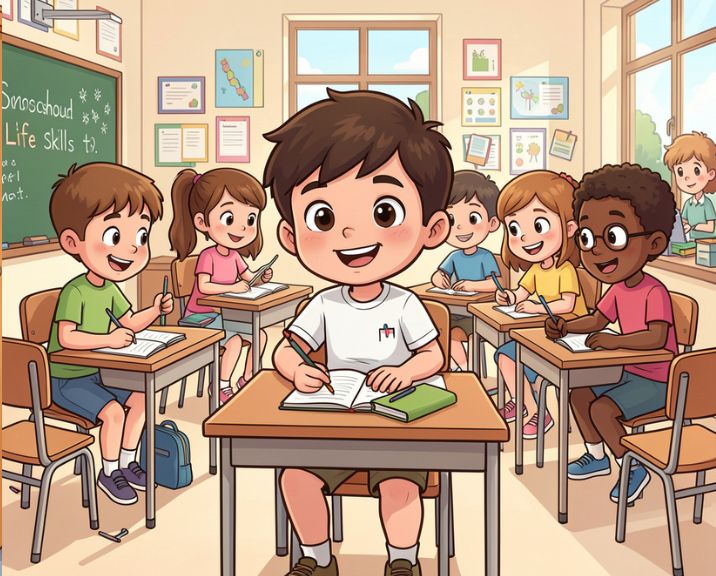
Why Schools Should Teach Life Skills to Students
The world students are preparing for is changing faster than ever. Careers are evolving, workplaces demand adaptability, and everyday life requires practical decision-making. In this environment, life skills are no longer optional they are essential.
Yet, many students still experience a gap between what they learn in classrooms and what the real world expects from them. While academic knowledge is important, students also need flexible, transferable skills that help them apply what they know in real situations. This is why schools must actively teach life skills alongside traditional learning.
What Are Life Skills and Why Do They Matter?
Life skills are the abilities students use to handle real-life challenges confidently. These skills help them communicate better, work with others, manage emotions, make responsible choices, and adapt to change.
When life skills are developed early, students are able to use their academic learning more effectively. They can express ideas clearly, participate in groups, solve problems with maturity, and navigate social situations with confidence.
In short, life skills strengthen both learning and personality.
The Gap Between Classroom Learning and Real-World Demands
Many students perform well in written exams but struggle when faced with real-world situations that require teamwork, communication, or independent thinking.
This mismatch happens because real life is not always structured like a textbook question. In the real world, students must learn how to deal with people, manage time, handle disagreements, and make decisions with limited guidance. Without these abilities, even strong academic knowledge can feel incomplete.
Schools play an important role in closing this gap by teaching skills that are practical, flexible, and relevant to everyday life.
Why Schools Should Teach Life Skills Early
The foundation years shape how children think, behave, and respond to challenges. When life skills are introduced early, students develop strong habits that stay with them as they grow.
At The Manthan School, emphasis is placed on holistic learning, helping students build a strong educational foundation while also developing the skills that support future success. Recognised as one of the best schools in Delhi NCR and a trusted high school in Greater Noida West, the school focuses on nurturing students in a way that prepares them not only for exams, but for life beyond the classroom.
A strong foundation-level education sets the tone for a student’s growth. It supports confidence, discipline, and the ability to learn independently over time.
Social Skills: Students Must Learn How to Work With Others
Students don’t automatically know how to collaborate. Positive social behaviour like listening, sharing, waiting, and contributing needs to be taught and practised, just like reading and writing.
Children can start learning teamwork from a very young age through simple classroom routines. Over time, these skills grow into more advanced abilities that help students handle group situations with maturity.
How Teamwork Skills Grow With Age
As students progress, they can be guided to develop stronger interpersonal skills. A few examples include:
- learning how to be a responsible member of a group
- understanding how to move and behave in shared spaces respectfully
- practising how to disagree with ideas without disrespecting people
- learning how to ask questions to clarify doubts or gather information
- developing patience while listening to others’ viewpoints
These skills support classroom learning, friendships, and later, workplace success.
How Group Activities Help Build Life Skills
Group projects and team-based tasks give students real practice in collaboration. They learn how to share responsibility, communicate clearly, and work toward a common goal.
At The Manthan School, students are encouraged to work in teams for projects and creative tasks. This helps them understand what it means to be part of a group, reflect on their role, and build stronger cooperation and communication.
When schools create an environment that supports teamwork, students develop life skills naturally skills that transform potential into real ability.
Conclusion
Teaching life skills in school is one of the strongest ways to prepare students for the world they will live and work in. Life skills bridge the gap between academic learning and real-world success by helping students apply knowledge with confidence, maturity, and adaptability.
When schools focus on holistic development building both learning and life readiness students grow into capable individuals who can collaborate, communicate, solve problems, and handle challenges with strength. And that is exactly what sets the foundation for a brighter future.