A New Dimension of Learning Through Holistic Education
Education today is not only about marks and textbooks. Parents and schools are increasingly looking for a learning approach that helps children grow as confident individuals students who can think rationally, express creatively, and handle challenges with maturity.
That is where holistic education brings a new dimension to learning. It supports academic growth, but it also nurtures emotional strength, social skills, resilience, and a deeper understanding of life. The goal is to help students become not only academically capable, but also well-rounded and future-ready.
What Is Holistic Education?
Holistic education is a learning methodology that focuses on the complete development of a child. It recognises that learning is not limited to the mind it includes emotions, behaviour, relationships, and life experience.
This approach helps students grow into rational thinkers with imaginative minds. It also prepares them to face academic and real-life challenges with confidence because they develop skills that support both performance and personality.
Holistic education encourages students to understand themselves better, build healthier relationships, and develop positive social behaviour. It strengthens emotional maturity and resilience, helping children handle pressure and change with greater stability.
What Makes Holistic Learning Different?
Holistic learning looks at education as something deeper than completing lessons. It focuses on how children learn, why they learn, and what kind of individuals they become through the learning process.
It supports development in areas like:
- self-awareness and personal growth
- emotional and social development
- resilience and confidence
- empathy and healthy relationships
- curiosity, creativity, and a love for learning
This is why holistic learning is often described as education that shapes the child for life—not only for exams.
Key Elements of a Holistic Learning Environment
A holistic learning environment includes teaching methods and experiences that help children learn actively and meaningfully.
Here are some major aspects of holistic learning in schools.
Learning by Doing
Children learn better when learning feels real. Holistic education emphasises activity-based learning where students explore, experiment, and understand concepts through practical experiences.
- encourages hands-on projects and real engagement
- improves understanding through action and discovery
- builds curiosity and stronger retention
Problem-Solving and Critical Thinking
A modern student needs more than memorisation. Holistic learning builds skills that help children analyse situations, think logically, and solve problems confidently.
- supports decision-making and reasoning
- helps students handle academic challenges better
- encourages independent thinking
Group Work and Social Skill Development
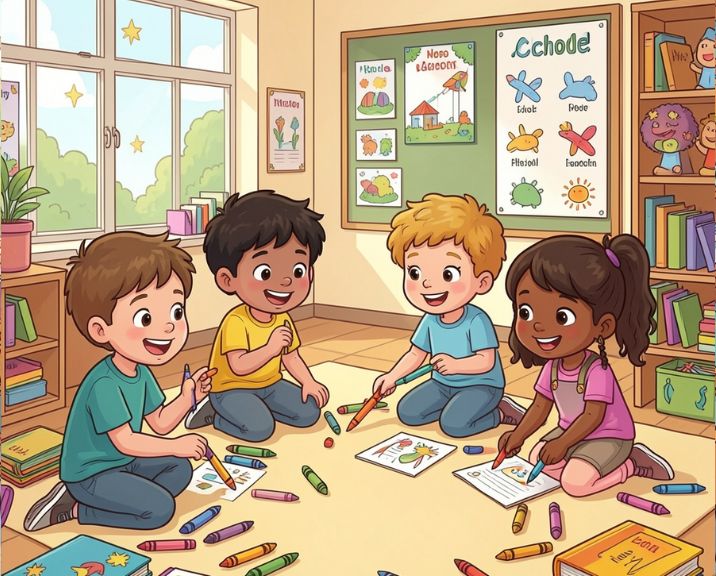
Holistic education supports teamwork and communication. Students learn through collaboration, which improves confidence and social behaviour.
- builds communication and cooperation
- strengthens peer interaction and social confidence
- teaches respect for different viewpoints
Collaboration Over Competition
Instead of focusing only on comparison, holistic learning encourages collaboration and cooperation. This helps students grow in a healthier learning environment where growth is not based on fear, but on motivation.
- reduces performance pressure
- encourages shared learning and mutual support
- improves classroom culture and student confidence
Creating Lifelong Learners
Perhaps the strongest outcome of holistic education is that students develop a genuine love for learning. They become curious, motivated, and willing to explore beyond the syllabus.
- builds interest-based learning habits
- helps students learn naturally and creatively
- supports continuous growth beyond academics
Why Holistic Learning Supports All-Round Development
The biggest advantage of holistic learning is that it supports the child as a whole not only mental development, but psychological, social, and emotional growth too.
Every child has a different personality and learning style. Holistic education recognises this individuality and supports students in a way that fits how they learn best. This makes learning feel more natural and more enjoyable, which improves both engagement and performance.
Students learn not only what to think, but how to think and that becomes a lifelong skill.
Holistic Learning at The Manthan School
At The Manthan School, holistic education is an important part of the learning approach. Students are encouraged to grow as rational thinkers with creative minds, supported through practical learning, skill development, teamwork, and a nurturing environment.
As one of the best CBSE schools in Greater Noida West, The Manthan School aims to help students develop not only academically, but also emotionally and socially so they are prepared for the future with confidence.
Conclusion
Holistic education adds a powerful new dimension to learning. It develops students who are confident, creative, emotionally balanced, and capable of handling real-life challenges alongside academics.
When schools focus on the whole child mind, emotions, skills, and values students grow into lifelong learners who are ready not just to succeed in school, but to succeed in life.