
Curiosity is the Most Important Element of Intelligence
The children of today are gearing up to become adult citizens of tomorrow. The growth is parallel to the future of our country, reflected through the quality of the present education system. A school must stimulate curiosity in the young, impressionable minds from their foundation years as curiosity enhances the degree of intelligence in a student.
Curiosity helps children make sense of the world around them. When young learners are encouraged to ask “why” and “how,” they develop stronger observation skills, improved problem-solving abilities, and a deeper interest in learning. A curious mind stays active, sharp, and open to new experiences qualities that shape a child’s intelligence and overall growth.
The Manthan School is one of the best schools in Greater Noida West that instills the students with a strong desire to know, learn, and question via a creative and engaging curriculum. The curriculum of The Manthan School is designed in such a way that apart from world-standard education knowledge, various creative activities are integrated into the school curriculum to enhance the curiosity of the young minds.
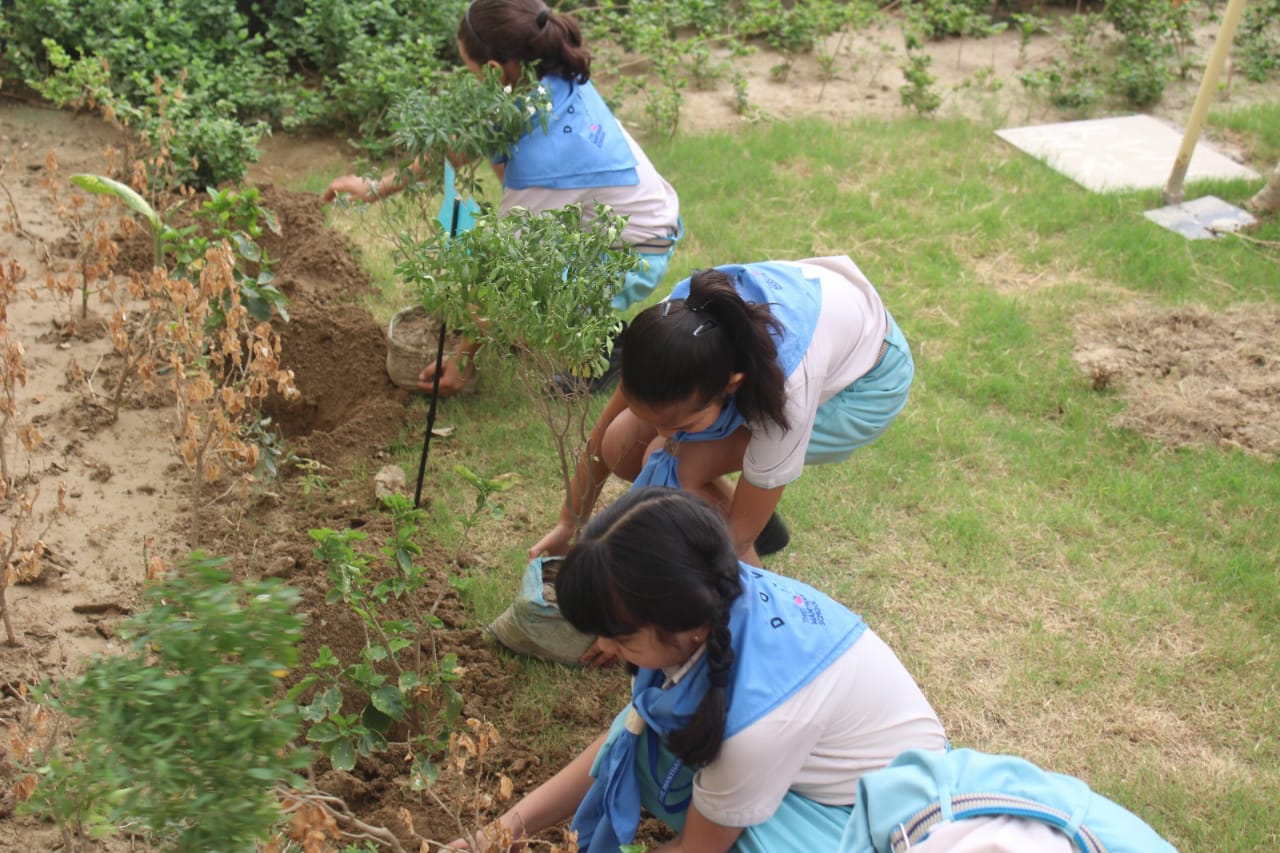
How to Nurture Curiosity Among Children
Developing curiosity does not require complicated methods — simple daily interactions, meaningful conversations, and the right learning environment can spark a lifelong love for discovery. Here are some effective ways to nurture curiosity in children:
Encourage Exploration
Create an environment that encourages children to explore their surroundings and interests. Foster a sense of wonder by allowing them to investigate, ask questions, and discover answers on their own.
When children feel safe to explore freely, they become more confident in trying new things. Exploration encourages them to think independently, notice details, and build their own understanding of the world.
Support Inquiry-based Learning
Promote inquiry-based learning methods where students actively seek solutions to questions. This approach not only develops research skills but also fuels their natural curiosity by making the learning process more engaging.
Inquiry-based learning also strengthens decision-making and reasoning skills. As children investigate answers on their own, they become more responsible learners who understand the importance of effort and persistence.
Provide Hands-on Experiences
Facilitate learning through hands-on experiences. Practical activities and experiments not only make learning fun but also allow children to connect theoretical knowledge with real-world applications, sparking curiosity.
Activities such as science experiments, art projects, or simple real-life problem-solving tasks help children connect classroom learning with everyday life. This connection keeps them excited and eager to learn more.
Integrate Creative Elements into Curriculum
Follow the example set by The Manthan School by integrating creative activities into the curriculum. Arts, music, and hands-on projects stimulate imagination, providing diverse avenues for exploration and nurturing a love for learning.
Creativity activates a child’s imagination and allows them to view problems from different angles. When creativity and academics go hand in hand, students naturally develop an interest in discovering how things work.
Celebrate Curiosity
Create a positive atmosphere where curiosity is celebrated. Encourage children to ask questions, and value their inquisitiveness. By acknowledging and appreciating their curiosity, you reinforce its importance in the learning process.
Celebrate even the smallest questions. Every question a child asks is a sign that their mind is growing and trying to understand something new. Acknowledging these efforts motivates them to keep exploring.
Provide a Variety of Learning Resources
Offer a diverse range of learning resources, including books, multimedia, and educational games. This variety not only caters to different learning styles but also keeps children curious and eager to explore new knowledge sources.
Exposure to diverse materials helps children discover new interests. Whether it’s a book on space, a puzzle about animals, or an educational video, each resource opens a new window of curiosity.
Facilitate Open-ended Discussions
Foster an environment where open-ended discussions are encouraged. Allow children to express their thoughts, opinions, and questions freely. This not only nurtures curiosity but also enhances critical thinking skills.
These discussions not only encourage curiosity but also strengthen communication skills. Children learn to express their ideas clearly and listen to different viewpoints.
Embrace a Curiosity-driven Curriculum
Design a curriculum that revolves around cultivating curiosity. The Manthan School’s approach of integrating creative elements into education serves as a model. Such a curriculum stimulates young minds and keeps them engaged in the learning process.
A curiosity-driven curriculum ensures that learning remains active rather than passive. It transforms classrooms into spaces where children experiment, observe, express, and innovate.
Connect Learning to Real-world Contexts
Relate lessons to real-world contexts to make learning more meaningful. When children see the practical applications of what they are learning, it sparks curiosity about the world around them and its interconnectedness.
Real-life examples make learning relatable. When students understand how concepts apply outside the classroom, they naturally ask deeper questions and show genuine interest in subjects.
Be a Curious Role Model
Demonstrate curiosity as an educator or parent. When children observe adults expressing interest, asking questions, and seeking knowledge, they are more likely to adopt a similar curious mindset. Lead by example in fostering a culture of curiosity.
Children imitate the behaviour of adults around them. Showing excitement toward learning even about simple things encourages them to adopt a similar attitude and stay curious throughout life.
Conclusion
Curious students not only ask questions but also actively seek out the answers themselves. Students discover a sense of purpose in their learning through the curiosity of questioning that leads them to think beyond knowledge and education. Aside from preparing the brain for learning, curiosity also makes learning a more rewarding experience and more receptive to learning for students. Because of curiosity, the students manipulate things with the aim of gaining new experiences.
Curiosity creates active thinkers and independent learners. When students enjoy discovering new ideas, they develop a positive approach towards learning that lasts beyond school years. It also improves concentration, memory, and emotional growth.
The vision of The Manthan School, the best play school in Noida Extension, is to provide a safe, happy, and protective environment built around the curriculum that enables students to wonder and be curious, explore with a free mind, and equip them with the skills to become life-long learners. So, enroll your kid at The Manthan School which is the leading school of modern education and learning.