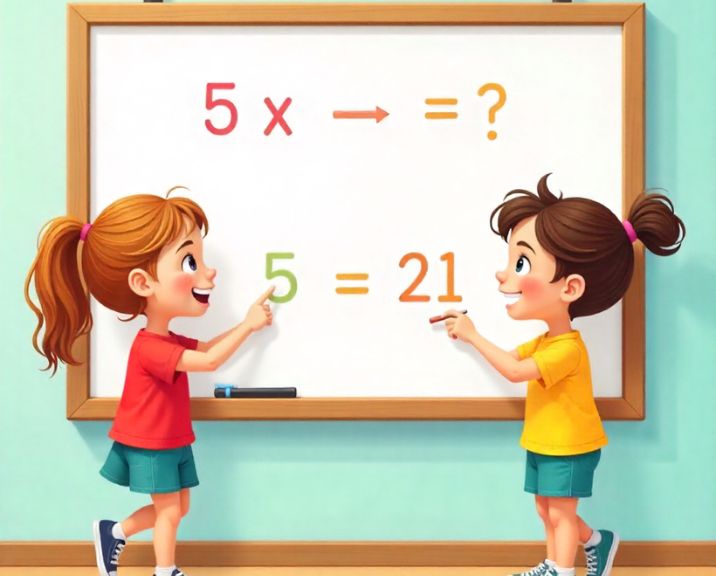
Unlocking the Power of Logical Thinking: Teaching to Think and Reason
Logical reasoning goes beyond simple decision-making; it involves the capacity to anticipate consequences and implications. Developing this skill enhances active and effective learning by encouraging students to ask pertinent questions that facilitate their educational journey. Moreover, it fosters a deeper engagement in the learning process and empowers students to make well-informed and sound decisions based on logical thinking.
When children learn to think logically, they begin to understand why things happen and how different ideas connect. This ability helps them become curious learners who are not afraid to ask questions or explore multiple solutions. Logical thinking not only strengthens academic growth but also builds confidence in tackling everyday challenges.

How teaching logical thinking helps students?
Teaching logical thinking provides students with a wide range of benefits and advantages that extend beyond their academic pursuits. Here are some ways in which teaching logical thinking helps students:
- Problem-solving skills: Logical thinking equips students to break down complex problems into smaller, manageable parts. They learn to analyze situations critically, identify patterns, and devise effective solutions.
As students practice breaking problems into steps, they learn patience and persistence qualities that help them succeed not only in school but also in real-life situations where solutions aren’t always obvious. - Decision-making: Students who possess strong logical thinking skills can evaluate options more systematically and make informed decisions based on evidence and reasoning.
This structured way of thinking enables children to evaluate choices calmly, reducing impulsive decisions. With practice, they learn to trust their judgment and take responsibility for their actions. - Improved academic performance: Logical thinking enhances comprehension and reasoning abilities, leading to improved performance across various subjects and disciplines.
Logical thinkers grasp concepts faster because they understand the reasoning behind ideas rather than just memorizing them. This deeper understanding leads to long-term academic success. - Critical thinking: Logical thinking is a key component of critical thinking. It encourages students to question assumptions, evaluate arguments, and approach information more critically.
When children learn to analyze information, they become better at identifying facts from opinions. This empowers them to think independently and form their own viewpoints. - Creativity and innovation: Contrary to popular belief, logical thinking and creativity are not mutually exclusive. In fact, logical thinking can provide a solid foundation for innovative and creative problem-solving.
Logical thinking gives creativity direction. It helps students bring structure to imaginative ideas, making them more capable of developing practical and innovative solutions. - Better communication: Students with strong logical thinking skills can articulate their thoughts more clearly and persuasively, making them better communicators.
Being able to explain thoughts clearly helps children participate confidently in discussions, group projects, and presentations. This skill becomes even more valuable as they grow into adulthood. - Independence and autonomy: Logical thinking empowers students to rely on their own judgment and reasoning rather than solely depending on others’ opinions or authority figures.
Students learn to rely on their reasoning abilities, helping them become self-reliant. This independence fosters maturity and prepares them to handle responsibilities effectively. - Life skills: Logical thinking is a valuable life skill that extends beyond the classroom. It helps students navigate real-world challenges, make informed decisions, and understand the consequences of their actions.
From choosing friends wisely to managing tasks, logical thinking guides children in making choices that positively shape their future. - Resilience and adaptability: Logical thinking fosters adaptability, as students learn to adjust their approaches based on new information and changing circumstances.
When students see challenges as opportunities to try new approaches, they develop a growth mindset. This helps them remain calm and flexible when faced with change. - Scientific and technological advancement: Logical thinking is essential for progress in science, technology, engineering, and mathematics (STEM) fields, contributing to innovations and advancements in various industries.
In today’s world, STEM-based careers are rapidly growing. Teaching logical thinking early equips children with the foundation needed to succeed in these competitive fields.
Conclusion
The Manthan School is one of the best schools near gaur city where logical reasoning is an integral part of the curriculum and is being taught to all the students, especially during their foundation years. By implementing logical thinking activities into the classrooms, The Manthan School is setting the students up for success in their adulthood by raising and teaching them to be rational, analytical problem solvers, and critical thinkers who can see the world from many different angles and perspectives.
By nurturing logical reasoning at a young age, children learn to approach problems with clarity and confidence. It also strengthens their emotional intelligence, helping them become thoughtful, responsible individuals.
At The Manthan School which is among the top 10 school in Delhi NCR, teaching logical reasoning in the classroom encourages young learners to think for themselves, to question hypotheses, to develop alternative hypotheses, and to test those hypotheses against known facts. Also, it has been proven that teaching the skill of logical reasoning to learners from their initial years makes them smarter, more intelligent, and more proactive which will add great value to their careers and life.
In a nutshell, logical reasoning and thinking allow a student to reject quick answers, such as “I don’t know,” or “This is too difficult,” by empowering them to delve deeper into their thinking processes and understand better the methods used to arrive at a solution and even the solution itself.