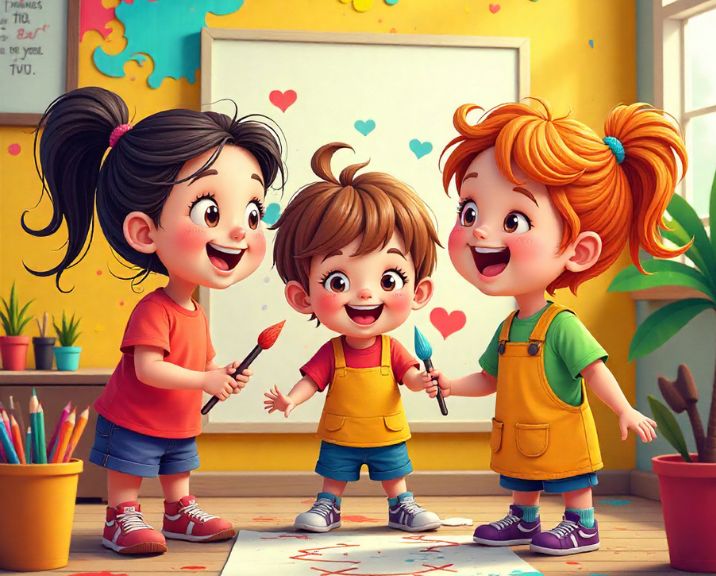
There is no depth to education without ART
Art is a form of Creative Mindfulness, a means of therapy that creates a relaxed vibe and nourishes our mind, body, and soul. It produces a sense of calm and serenity which stimulates and energizes a student’s morale and confidence. Art in the early years stimulates one’s five senses which results in shaping better development progress for students to become better thinkers, and innovators and develop strong leadership skills along with strengthening their innate capacity.
Art gives children a safe way to express what they feel especially when they don’t have the right words yet. A child may feel happy, nervous, excited, or even confused, and art helps them show those emotions in a healthy way. It also teaches patience and focus because creating something meaningful takes time and effort. Over time, children start believing in their own ideas, which improves confidence in the classroom too.
In many schools, art is seen as a “free period,” but it actually supports learning in a big way. When students do music, dance, theatre, or visual art, they learn observation, imagination, and problem-solving naturally. These skills help in academics too because children start thinking deeper instead of only memorizing.
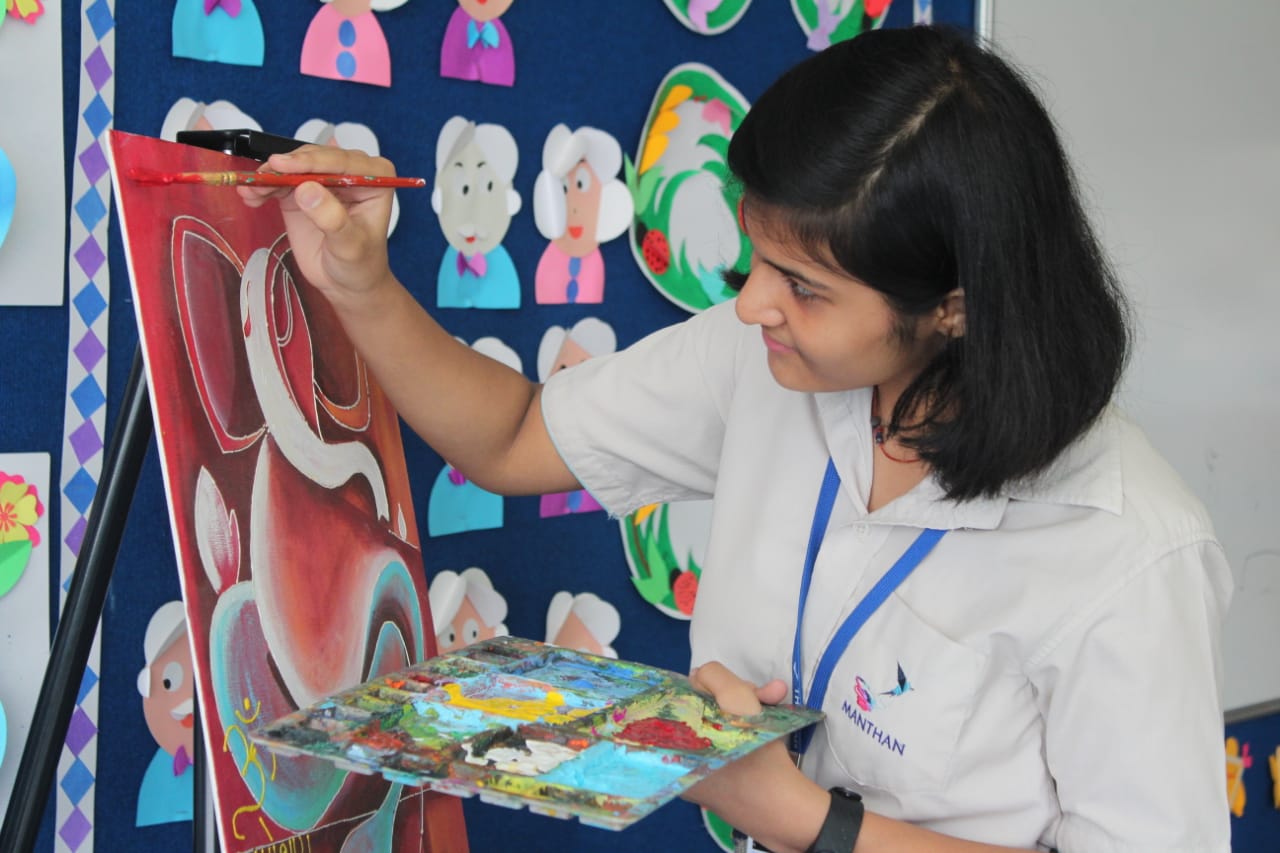
Benefits Of Art Education In Schools
There are many benefits of art education in schools. Some of the most important benefits include:
Increased creativity: Art education helps students develop their creativity, which is a valuable skill in all areas of life. Creative thinking can help students solve problems, come up with new ideas, and be more innovative.
Art helps students think beyond the usual and explore new ideas freely. When children draw, paint, act, or create something, they learn that there is more than one way to express a thought. This habit of trying different ideas also supports creativity in other subjects, because students start looking for new solutions instead of only following one fixed method.
Enhanced academic performance: Studies have shown that students who participate in art education tend to have higher academic achievement than those who do not. This is likely because art education helps students develop critical thinking skills, problem-solving skills, and self-expression skills, all of which are important for academic success.
Art supports learning in a subtle but strong way. When students work on art activities, they improve observation, listening, memory, and understanding of patterns. These skills naturally help in reading, writing, maths, and science too. Art also makes learning more enjoyable, and when children enjoy learning, they participate more and perform better.
Enhanced social-emotional skills: Art education can help students develop social-emotional skills such as empathy, self-awareness, and self-regulation. These skills are important for building relationships, managing stress, and making good decisions.
Art gives students a healthy way to express emotions such as happiness, anger, fear, or excitement. It also helps them understand feelings in others. When students participate in group art, theatre, or music activities, they learn teamwork, patience, and respect for different perspectives. Over time, this builds empathy, confidence, and stronger relationships with peers.
Reduced stress: Art can be a great way to reduce stress and anxiety. When students engage in art activities, they are able to express themselves creatively and tap into their emotions in a healthy way. This can help them to feel better about themselves and their place in the world.
Art can be very calming for students, especially when school life feels busy or pressuring. Painting, colouring, music, or clay work helps the mind slow down and relax. It gives students a break from constant screen time and academics, and helps them feel refreshed. This calm mindset supports better learning and emotional balance.
Improved focus and attention: Art can help students improve their focus and attention skills. When students are engaged in art activities, they are required to focus on the task at hand and pay attention to detail. This can help them to improve their ability to focus on other tasks, such as schoolwork.
Many art activities require children to concentrate on small details—like shapes, colours, rhythm, or finishing a task neatly. This improves attention span and helps students practice staying engaged for longer periods. When children learn to focus during art, they often find it easier to focus during studies as well.
Increased self-esteem: Art education can help students develop a positive sense of self-esteem. When students are able to create something that they are proud of, it can boost their self-confidence and make them feel good about themselves.
Another important benefit is that art creates a sense of belonging. When students work on a group performance, a class display board, or a school event, they learn teamwork and respect for others’ talents. It also helps teachers understand students better sometimes a child’s artwork reflects their thinking, interests, and emotions in a very honest way.
The Manthan School is among the best schools in Greater Noida West in which art education is a part of the school curriculum. Art comprises various disciplines under its umbrella; music, dance, theatre, and visual arts. Pinching or squeezing clay, doodling, scribbling, painting, paper tearing, and paper crumpling, effectively using a rolling pin, dabbing, etc. All these activities help a student develop their dexterity which improves fine motor skills along with strong eye-hand coordination. Also, students can express their feelings better, connect socially with ease, increase their creativity and imagination, and most importantly have lots of fun.
What makes these activities valuable is that they are not rushed. Children are encouraged to explore freely, try different methods, and enjoy the process. This kind of learning helps students develop originality and self-confidence, because they feel proud of what they create with their own hands.
Art also teaches students that it’s okay to make mistakes. A wrong stroke in painting or a missed step in dance becomes a chance to improve not a failure. This mindset is very important for children, because it helps them stay positive and keep trying in academics and in life.
Conclusion
Art therapy aids in emotional healing and inner turbulence in an individual. Its free-flowing character encourages young minds in being secure and comfortable in one’s skin and enjoys the golden moments that we often miscount due to unremitting stress as we grow. It is imperative to nurture young minds in their early years for being great individuals who can look for opportunities, gratitude, peace, and serenity even in the smallest of opportunities and realize their golden moments. If you are looking for the best schools in Delhi NCR for your child, The Manthan School is the best school for your child which provides excellent education and learning to make your child successful in life.
In the end, art brings balance to education. It builds creativity, emotional strength, and confidence qualities that every child needs to grow into a happy and capable adult. When schools give art the right importance, students don’t just learn better they feel better too.