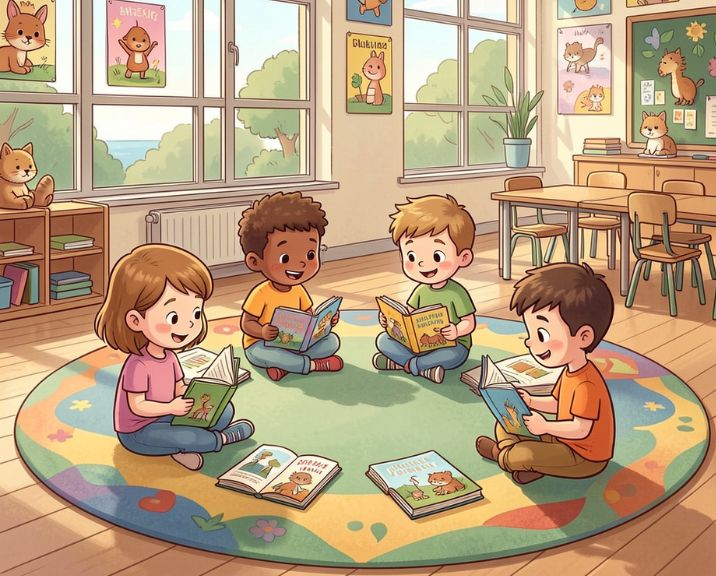
Read to Lead the World: Why Reading Matters for Children
“There are many little ways to enlarge your child’s world. Love of books is the best of all!” — Jacqueline Kennedy
A child’s world expands every time they open a book. Reading introduces them to new ideas, new words, different emotions, and fresh ways of thinking. It isn’t only a hobby it becomes a quiet daily habit that shapes how a child learns, expresses, and understands life.
Books also give children something priceless: a safe space to explore. Through stories, they learn about people, relationships, courage, fear, kindness, and curiosity often before they experience these feelings in real life.
Why Books Matter in a Child’s Everyday Learning
Books are more than pages filled with words. They are a rich resource of information, imagination, and guidance that supports children at every stage of learning.
Stories reflect history, culture, mythology, beliefs, and dreams about what the future could look like. As children grow, books can become trusted companions helping them build confidence, discover interests, and absorb life lessons that stay with them.
Over time, reading also strengthens how children process information. They begin to connect ideas, understand situations better, and develop stronger thinking habits without even realising it.
The Importance of Reading in the Early Years
The early years are when a child’s brain is developing rapidly. Reading during this stage supports academic growth, but it also nurtures a lifelong love for learning.
Children who read regularly often find it easier to engage with classroom learning. They become more comfortable with new concepts, more curious about questions, and more willing to explore topics beyond the textbook.
How Reading Supports Academic Success
Reading is closely linked with stronger learning outcomes because it improves core skills that children use in every subject. It naturally strengthens vocabulary, comprehension, and the ability to understand instructions.
Just as importantly, it trains the mind to think with structure. Most stories follow a sequence beginning, middle, and end which helps children develop logical thinking and stronger recall.
Key Benefits of Reading for Children
Reading supports multiple areas of a child’s development language, learning, and personal growth. It helps them become more prepared for school and more confident in how they express themselves.
Here are some of the most meaningful benefits children gain through regular reading:
- Improved language skills through better vocabulary and sentence understanding
- Stronger comprehension as children learn to interpret meaning and context
- Better focus and attention by spending time with structured reading
- Greater general knowledge by exploring diverse topics and ideas
- Clearer thinking patterns due to the natural sequence of stories
- Enhanced listening skills as reading improves how children absorb information
How Reading Improves Focus and Concentration
One of the lesser-discussed benefits of reading is the way it builds attention span. When children follow a story, they practice staying engaged, remembering details, and connecting events.
This habit gradually improves focus in other areas too classroom learning, instructions, and even daily conversations. As children read more, they begin to spend more time understanding the “why” of a situation rather than rushing through it.
From Early Readers to Lifelong Leaders
Children who read early often carry that habit forward. Over time, they don’t just become lifelong readers they develop qualities that support leadership as well.
Reading helps children think independently, understand different perspectives, and communicate with clarity. These are qualities that shape confidence and decision-making as they grow.
It also nurtures a child’s inner voice. The more children read, the more they learn to reflect, evaluate, and form their own opinions skills that matter far beyond school.
Reading as a Part of School Learning
To make reading a consistent habit, it needs to be encouraged both at home and in school. When reading becomes part of the learning environment, children get regular opportunities to practise and improve.
At The Manthan School, reading skills are part of the curriculum, supporting students from the early years onward. As one of the best primary schools in Noida Extension and a well-recognised CBSE school in Greater Noida West, the focus remains on building strong foundational skills that help children succeed confidently in academics and in life.
Conclusion
Reading is one of the simplest, strongest ways to support a child’s growth. It builds language, improves focus, strengthens comprehension, and develops thinking habits that children carry into every subject and stage of life.
When children read regularly, they don’t just learn more they learn better and in a cbse school in Greater Noida West like The Manthan School, this habit becomes a strong foundation for lifelong learning. And with every book they finish, they step a little closer to becoming thoughtful learners and confident leaders of tomorrow.