Exploring the World Through Play-Based Learning
Have you ever watched a child spend almost an hour building a tower with blocks, pretending to run a grocery store, or creating an entire world with just a few toys? Honestly, it might look like they’re “just playing,” but if you look a little closer, you’ll notice something amazing happening. They’re learning, exploring, solving problems, making friends, and understanding the world in ways that no worksheet could ever teach.
At The Manthan School, Noida, we believe childhood should be filled with curiosity, laughter, questions, and lots of meaningful experiences. Out of all the ways children learn, play-based learning is somewhat one of the most powerful because it feels natural to them. Whenever children are allowed to play, they don’t realize they’re learning and that’s exactly what makes it so much more effective.
It All Begins with Curiosity
Think about a toddler stacking blocks. They try once, the tower falls. They try again. This time it stands a little taller before tumbling over. They don’t easily give up. Instead, they laugh, rebuild, and keep on trying dedicatedly.
They’re learning how to be patient, how to be balanced, how to problem-solve, all without even knowing it.
Or think about a group of children playing “restaurant”. One is the chef, another is the “waiter,” while someone else becomes the customer. They agree on roles, they resolve little disagreements, count pretend money as well as use new words during conversations. It may seem like a simple game, but every minute of that play is filled with valuable learning.
That’s what makes play important.
Why the Early Years Matter So Much
Scientific research over the past three decades has shown that the years from birth to around eight years old are the most important period of human development. During this time, children’s brains develop at an incredible pace, creating the foundation for future learning, emotional well-being, social skills, and physical as well as mental health.
According to UNICEF, learning during these early years happens much faster than at any other stage of life. The preschool years, in particular, lay the groundwork for success in school and beyond. While learning continues throughout life, these early experiences are what shape how children think, communicate, build relationships, and understand the world around them.
This is why giving children meaningful opportunities to explore, imagine, and play is very much important. The experiences they have today almost become the building blocks for tomorrow.
Play Is Much More Than Fun
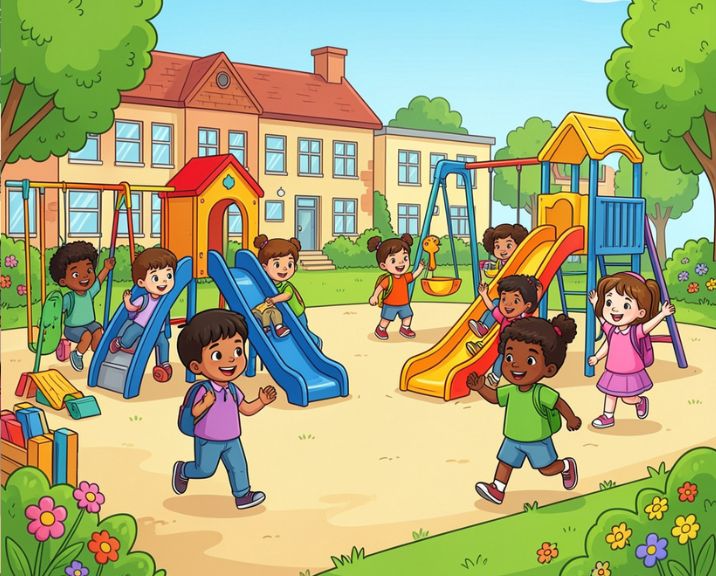
Whenever people hear the word “play,” they often imagine children running around on a playground. While that certainly counts, play can take many different forms.
It can be building with blocks.
It can be painting.
It can be pretending to be astronauts.
It can be solving puzzles.
It can even be asking endless “Why?” questions.
Whichever form it takes, real play gives children the freedom to explore, make choices as well as to discover things on their own. They become active participants instead of simply following instructions.
And that’s where the real learning truly begins.
Learning Doesn’t Stop at the Classroom Door
UNICEF has shared some of the most meaningful ideas, one of which is that children’s learning should connect their home, school, community, and the wider world.
Learning doesn’t occur in isolated boxes.
It continues whenever children bake cookies with grandparents, water plants at home, visit a park, help set the dinner table, or explore nature during a family walk.
All experience contributes to their knowledge in some way. Parents, teachers and caregivers all become part of the same learning journey.
At The Manthan School, Noida, we believe these connections make learning richer and more meaningful because children begin to see that curiosity has no boundaries.
The Role of Adults
Play-based learning does not imply that adults step aside. Their role is very important, in fact.
Sometimes children need complete freedom to explore on their own. Other times, they benefit from little guidance, thoughtful questions, or just someone encouraging them to think a little more deeply.
A teacher might ask, “What do you think will happen if we add just another block?”
A parent might wonder, “How could we make this bridge even stronger?”
Questions like these don’t provide answers. Rather, they encourage the children to find the answers all on their own.
Every Playful Moment Has a Purpose
Of all the lessons children are taught in their early years, one of the most important is to develop a love for learning.
When learning feels enjoyable to children, they stay curious.
When they’re curious, they ask different types of questions.
When they ask questions, they want to explore.
And whenever they explore, they continue growing.
This is what we call magic in play-based learning.
A Childhood That Builds the Future
At The Manthan School, Noida, a CBSE school in Noida, we see play as much more than recreation. It is a meaningful pathway to creativity, confidence, resilience, communication as well as lifelong learning.
Every game, every conversation, every imaginative play activity, and every curious question becomes an opportunity for children to learn about the world around them, and about themselves.
Because sometimes, the biggest lessons begin with something as simple as a child saying,
“Come, let’s play.”