New Learning for New Gen Learners
A child can remember a definition, solve a textbook question and still need help when asked to use that knowledge in a new situation. This is one of the reasons education is increasingly moving towards learning that asks students to understand, apply, question and create, rather than simply remember information.
For today’s learners, the classroom is not only a place to collect knowledge. It is also a place to develop the ability to think independently, communicate ideas, work with others, solve unfamiliar problems and learn from experience.
This shift is reflected in India’s current education framework. The National Education Policy (NEP) 2020 encourages activity-based, discovery-based and experiential learning, while the National Curriculum Framework for the Foundational Stage places strong emphasis on learning through play, projects, exploration and real-world experiences.
This is what makes skill-based learning increasingly relevant for new-generation learners.
From Knowing Something to Knowing What to Do With It
Traditional classroom learning often begins with a simple question:
“What do students need to know?”
Newer approaches add another question:
“What can students do with what they know?”
Consider a child learning about measurement. Reading the definition of length is one part of learning. Measuring objects around the classroom, comparing their sizes, recording observations and explaining the results gives the child another kind of understanding.
The same principle can be applied across subjects.
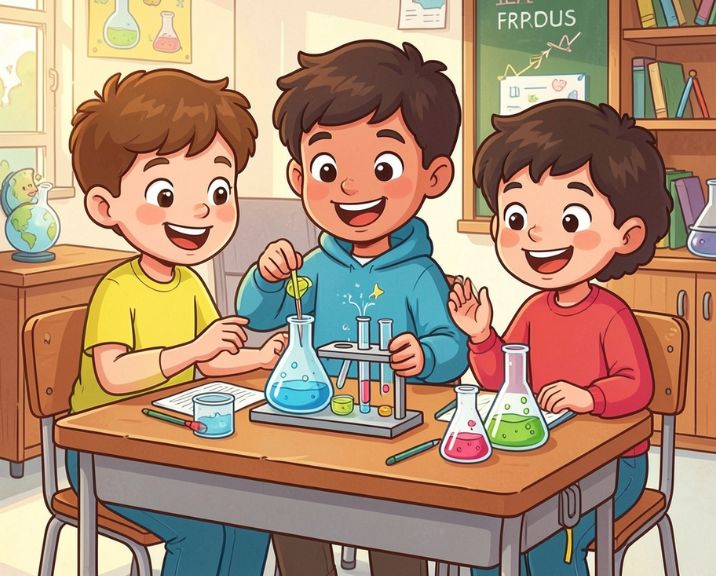
A science lesson can involve observation and experimentation.
A language lesson can involve storytelling or presentation.
A mathematics lesson can involve solving a practical problem.
An environmental topic can become a project based on the child’s surroundings.
The subject knowledge remains important. What changes is the opportunity to use that knowledge.
NCERT’s National Curriculum Framework for the Foundational Stage describes project-based learning as a way for children to explore real-world questions, collaborate, ask questions, develop critical thinking and solve problems.
Why Skill-Based Learning Matters Now
The skills children will need as they grow are not limited to the skills required to complete school examinations.
The World Economic Forum’s Future of Jobs Report 2025, based on the views of more than 1,000 employers across 55 economies, reports that around 39% of workers’ existing skill sets are expected to change by 2030. Analytical thinking remains one of the most important core skills, while creative thinking, resilience, flexibility, agility and curiosity are also expected to become increasingly important.
Children do not need to be trained for a particular job at an early age. They need something more fundamental: the ability to keep learning and adapt when circumstances change.
That is where modern school learning has an important role to play.
What Does New Learning Look Like in a Classroom?
New learning does not necessarily mean replacing textbooks, notebooks or traditional teaching.
Instead, it can change what happens around those resources.
A lesson can move through a simple cycle:
Understand → Explore → Apply → Discuss → Reflect
For example, a teacher may first introduce a concept. Students then explore it through an activity, apply it to a problem, discuss their observations and finally reflect on what they have learned.
This gives students a reason to use the information instead of treating it as something to memorise for a test.
The NEP 2020 specifically encourages experiential learning and says that students should have opportunities to learn through activity, exploration and experience.
Projects Can Turn a Lesson Into an Experience
Project work is one practical way of bringing skill-based learning into school.
A good project does not have to be complicated.
Suppose students are asked to explore how much plastic is used in their classroom during one week. They could:
- Observe and collect information.
- Categorise the waste.
- Record their findings.
- Discuss possible reasons.
- Suggest alternatives.
- Present their ideas to the class.
The students are still learning concepts related to numbers, environment, communication and analysis, but they are learning them through a problem that has a connection with their surroundings.
This is also why NCERT describes authentic, real-world project work as an opportunity for children to explore, discover, collaborate, inquire and develop critical thinking and problem-solving skills.
The Skills Behind the Learning
The phrase “skill-based learning” can sound broad, so it is useful to look at what students are actually practising.
Critical Thinking
Students should not only receive an answer. They should sometimes be asked to explain why they think an answer is correct.
Questions such as:
- Why do you think this happened?
- What evidence supports your idea?
- Is there another possible solution?
- What would happen if we changed one part of the situation?
encourage students to examine ideas rather than accept them automatically.
Problem-Solving
Real problems rarely come with instructions telling us exactly what to do.
When students encounter open-ended activities, they have to identify the problem, consider different possibilities, try a solution and evaluate the result.
Even when the first attempt does not work, the process itself becomes part of learning.
Creativity
Creativity is not limited to drawing or performing arts.
A student can demonstrate creativity by finding a different way to solve a mathematics problem, designing a model, developing a story, creating a presentation or suggesting a new solution to an environmental problem.
The objective is to give students enough room to think beyond a single predetermined response.
Communication
An idea has limited value if a student cannot explain it.
Discussions, presentations, storytelling, group projects and classroom conversations give children opportunities to organise their thoughts and communicate them.
Communication also means listening. Students need to understand how to respond to another person’s idea rather than simply waiting for their own turn to speak.
Collaboration
Working with classmates introduces a different learning experience from working alone.
Students have to share responsibilities, listen to different opinions, negotiate decisions and contribute towards a common outcome.
These are not skills that develop simply by reading about teamwork. They develop through actually working with other people.
Resilience and Adaptability
Learning also involves getting things wrong.
A model may not work. An experiment may produce an unexpected result. A presentation may not go as planned.
Instead of treating every mistake as failure, schools can help children examine what happened and decide what they could try next.
That habit of adjusting and trying again becomes increasingly valuable as students grow.
The WEF’s 2025 employer research identifies resilience, flexibility and agility among the skills whose importance is rising, alongside creative thinking and curiosity.
Technology Should Support Learning, Not Replace Thinking
New-generation learners are growing up surrounded by digital technology. But simply giving students access to devices does not automatically create better learning.
Technology becomes useful when it helps students investigate, create, communicate or solve problems.
For example, students might use digital tools to research a topic, create a presentation, analyse information or collaborate on a project.
At the same time, children still need opportunities for discussion, reading, writing, hands-on activities and face-to-face collaboration.
The aim should therefore not be “more technology”. It should be better use of technology as one part of learning.
The Teacher’s Role Is Changing Too
Skill-based learning does not mean that teachers become less important.
In fact, the teacher’s role becomes more deliberate.
Instead of only delivering information, teachers can design situations in which students have to use that information.
A teacher may:
- Ask questions that have more than one possible approach.
- Give students a problem to investigate.
- Encourage children to explain their reasoning.
- Organise collaborative activities.
- Provide feedback during the process.
- Help students reflect on what they learned.
The teacher remains the person who provides structure, context and guidance, while students get more opportunities to participate actively.
How The Manthan School Applies This Approach
The idea of learning through experience is not something that has to be added artificially to The Manthan School’s educational approach.
The school’s current primary curriculum says that learning is driven by children’s natural curiosity and aims to develop their creative, emotional, physical, moral and intellectual potential. It also includes academic subjects alongside Computer Science, General Knowledge, Music, Dance, Art & Craft and Physical Education, with activities such as Smart Class, library learning and DEAR reading time forming part of the learning environment.
The school’s SHIN programme provides an even more direct example of this philosophy. Manthan describes SHIN as a Japanese-style experiential holistic group-learning programme involving hands-on activities and focusing on skills including logical thinking, critical thinking, creativity, problem-solving, communication and teamwork.
That distinction is important.
Skill development is not presented as a separate list of abilities that students simply memorise. The programme uses activities through which students can practise those abilities.
A Simple Example of Skill-Based Learning
Imagine students are given a challenge to create a simple structure using limited classroom materials.
The learning does not end with the finished structure.
While completing the task, students may have to:
- Decide what they want to build.
- Discuss different ideas.
- Divide responsibilities.
- Test different approaches.
- Deal with something not working.
- Modify their design.
- Explain their final result.
One activity can therefore involve planning, communication, collaboration, creativity, problem-solving and reflection.
This is the real value of activity-based learning: one experience can develop several connected skills while students are also learning subject concepts.
New Learning Does Not Mean Leaving Academics Behind
There is sometimes a misconception that skill-based education means reducing academic learning.
It does not.
Children still need strong foundations in language, mathematics, science and other subjects. The difference is that students are given opportunities to understand those subjects deeply and use them in different contexts.
The National Education Policy 2020 itself describes experiential learning as something to be integrated within subjects, rather than treating it as a replacement for subject learning.
A strong learning model therefore brings the two together:
Knowledge gives students the foundation.
Skills help them use that knowledge.
Preparing Children to Keep Learning
Perhaps the most useful outcome of skill-based learning is not a particular skill.
It is the development of a learner who is willing to ask questions, try something new, make mistakes, seek feedback and try again.
That matters because children will encounter technologies, careers and challenges that schools cannot fully predict today.
The WEF’s 2025 report points towards a labour market where technology-related skills are growing rapidly, but human capabilities such as analytical thinking, creative thinking, resilience, collaboration and curiosity continue to matter.
Schools can respond to this uncertainty not by trying to predict every future job, but by helping children become adaptable learners.
What New-Generation Learners Really Need
The new generation does not necessarily need a completely new definition of education.
They need learning environments that give them more opportunities to do something with what they learn.
They need classrooms where:
- Questions are welcomed.
- Ideas can be discussed.
- Mistakes can become learning opportunities.
- Projects connect learning with real situations.
- Students work with one another.
- Creativity has space.
- Teachers provide guidance and feedback.
- Academic knowledge and practical application support each other.
This is where the idea of “new learning” becomes meaningful.
It is not about making education fashionable or replacing everything that came before. It is about making learning more connected to how children think, explore and use knowledge.
Final Thoughts
The learners entering classrooms today will grow up in a world that will continue to change.
They will need knowledge, but they will also need the confidence to use it. They will need technology skills, but also the ability to think critically about information. They will need to work independently while also knowing how to collaborate with others.
New learning is therefore not simply about teaching more subjects. It is about creating better opportunities to learn through experience, application, discussion and reflection.
At The Manthan School, one of the best play school in noida, the emphasis on experiential activities, curiosity-driven learning and programmes such as SHIN reflects this broader approach to developing students’ academic and non-academic abilities.
For new-generation learners, the ultimate goal of education is not only to ask “What did you learn?”
It is also to ask:
“What can you do with what you learned?”
That is where knowledge begins to become a skill and learning begins to prepare a child for the future.