Discipline – The Key Ingredient of Success
Discipline is one of the habits that children gradually develop through everyday experiences. It is often associated with rules and routines, but true discipline goes beyond simply doing what someone tells us to do. It is about learning to manage our time, behaviour, responsibilities and choices, even when there is no one constantly reminding us.
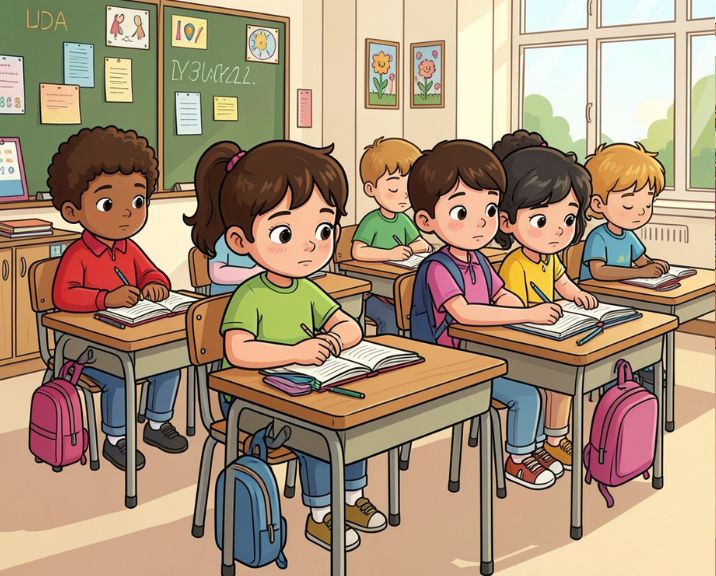
For children, school is one of the first places where they experience routines and responsibilities outside their home. Coming to class on time, listening when someone else is speaking, completing work, taking care of belongings and following shared classroom expectations may seem like small things. However, practising these behaviours regularly can help children become more organised, responsible and independent.
The National Curriculum Framework for the Foundational Stage also places emphasis on gradually developing self-control and self-discipline, rather than treating discipline simply as punishment or external control.
Discipline Begins With Everyday Habits
Children do not suddenly become disciplined when they enter school. The habit develops through repetition.
A child who learns to put away their books after an activity is learning organisation. A student who waits for their turn during a discussion is learning self-control. A child who remembers to complete a responsibility without being reminded every time is beginning to develop independence.
These small habits become particularly meaningful when children understand why they are expected to follow them.
For example, keeping the classroom organised is not only about following a teacher’s instruction. It teaches students that shared spaces belong to everyone and that each person has a responsibility towards them.
Similarly, being punctual is not simply about avoiding a late mark. It teaches children to value their own time as well as the time of others.
This is how discipline becomes part of a child’s character rather than just a list of school rules.
Discipline Is Not the Same as Punishment
There is an important difference between disciplining a child and punishing a child.
Punishment generally focuses on what happens after a rule has been broken. Discipline, when approached as part of education, should also help a child understand what happened and what they can do differently next time.
Suppose a student repeatedly forgets to bring the required material for an activity. Instead of only telling the child that they were careless, the teacher can help them develop a simple routine for preparing their school bag.
The student is then learning a practical solution rather than simply receiving a consequence.
The long-term goal is for the child to reach a point where they can say:
“I need to remember this myself.”
That shift from external reminders to internal responsibility is an important part of self-discipline. NCERT’s guidance similarly emphasises helping children gradually take responsibility for their own actions and develop self-control.
How Discipline Supports Learning
Discipline also has a direct connection with the way students learn.
A child needs to be able to pay attention, begin a task, stay with it when it becomes difficult and check whether the work has been completed properly. These abilities are closely connected with self-regulation.
For example, a student working on a project may need to decide what to do first, manage the available time, check their progress and change their approach if something is not working.
These are not merely academic habits. They are useful skills for handling responsibilities in everyday life.
Research on metacognition and self-regulation supports the value of explicitly teaching students how to plan, monitor and evaluate their learning. The Education Endowment Foundation’s current evidence review reports an average impact equivalent to around eight additional months of progress, while also noting that the quality of implementation matters.
This gives a more useful understanding of discipline. It is not about making children sit quietly for long periods. It is about helping them become increasingly capable of managing their own learning and behaviour.
Schools Can Build Discipline Through Responsibility
One effective way of developing discipline is to give children age-appropriate responsibilities.
A younger student might be asked to organise classroom materials or return books to the correct place. Older students can take responsibility for parts of a group activity, project or classroom task.
When children are trusted with responsibility, they get an opportunity to experience the complete process:
Responsibility → Action → Result → Reflection
If something is forgotten, they can understand what went wrong and make a better plan next time.
This is much more meaningful than repeatedly telling children to “be disciplined”.
School activities can provide similar opportunities. Sports require students to follow rules and practise consistently. Group projects require students to complete their part of the work. Music, dance and creative activities can teach patience, practice and concentration.
In this way, discipline becomes something students experience and practise, rather than something they only hear about.
Discipline at The Manthan School
At The Manthan School, discipline is connected with the broader development of students rather than being limited to classroom rules.
The school’s current primary curriculum combines academic subjects with Value Education, Physical Education, Music, Dance, Art & Craft, Computer Science and General Knowledge, along with library periods and DEAR reading time. These different experiences give children opportunities to practise responsibility, cooperation, concentration and self-management in different situations.
The school’s primary-school approach also highlights interactive and hands-on learning, teamwork, critical thinking and problem-solving.
This matters because children may develop discipline differently in different situations. A student may practise concentration while completing artwork, teamwork during a group activity, persistence during a difficult academic task and responsibility while participating in a school activity.
The school has also stated discipline, values and integrity as part of its broader educational philosophy.
Helping Children Develop Self-Discipline
Parents and teachers both have an important role in this process.
Children can be encouraged to take responsibility for simple things according to their age — organising their belongings, completing tasks, preparing for the next day or following a regular reading routine.
At the same time, children should have room to make small mistakes and understand their consequences.
If a child forgets something, immediately solving the problem every time may prevent them from developing responsibility. Sometimes it is more useful to ask:
“What can you do differently tomorrow so that this does not happen again?”
Such questions encourage children to think about their own behaviour instead of depending entirely on adults for solutions.
The objective is not to make children perfect. They will forget things, become distracted and make mistakes. The important part is whether they gradually become better at recognising those situations and managing them.
The Discipline That Stays With a Child
The most valuable form of discipline is not the fear of getting into trouble.
It is the habit of thinking:
“This is my responsibility.”
“I need to finish what I started.”
“I should consider how my actions affect others.”
“I made a mistake, so I can try a different approach.”
These habits can be useful long after a child leaves school.
A disciplined learner is therefore not simply someone who follows every instruction. It is someone who gradually learns to manage their time, behaviour, responsibilities and decisions independently.
For schools, this makes discipline an important part of education not because every child needs to behave in exactly the same way, but because every child needs the opportunity to develop self-control, responsibility and independence.
At The Manthan School, a CBSE school in Noida, these qualities are supported through a combination of academic learning, values, activities, routines and opportunities for students to participate actively in their school experience.
Discipline, ultimately, is not about controlling a child. It is about helping a child learn to control and guide themselves.